
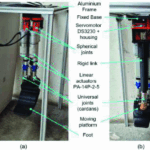
 Design, Optimization, and Experimental Validation of a 3-DOF Parallel Robotic Ankle Based on a 2SPU-1RU Architecture
This paper presents the design, implementation, and experimental validation of a 3-degree-of-freedom (3-DOF) parallel robotic ankle based on a 2SPU-1RU (two Spherical-Prismatic-Universal kinematic chains and one Revolute-Universal kinematic chain) architecture...
Año de publicación: 2026
Parkinson’s Hand Tremor Simulator with a Double Crank-Crank Mechanism to Measure the Essential Frequency
This work aims to significantly contribute to collecting and analyzing data on hand tremors in patients with Parkinson’s disease, simplifying and enhancing the typical procedures of clinical studies related to...
Año de publicación: 2025
This work aims to significantly contribute to collecting and analyzing data on hand tremors in patients with Parkinson’s disease, simplifying and enhancing the typical procedures of clinical studies related to...
Año de publicación: 2025
Hand and Wrist Motion Simulator for the Evaluation of Robotic Training Gloves Aimed at Children
Loss of motor function in the upper extremities of children due to injuries or medical conditions requires effective and specialized therapeutic solutions. Hand and wrist rehabilitation is complex because of...
Año de publicación: 2025
Loss of motor function in the upper extremities of children due to injuries or medical conditions requires effective and specialized therapeutic solutions. Hand and wrist rehabilitation is complex because of...
Año de publicación: 2025
Implementation of an Embedded Electronic Control System for a Functional Prosthetic Hand
The advancement of electronics enables the development of more complex functional prosthetics with more capabilities and functionality. The prosthetics currently developed do not leave the laboratory environment due to their...
Año de publicación: 2025
The advancement of electronics enables the development of more complex functional prosthetics with more capabilities and functionality. The prosthetics currently developed do not leave the laboratory environment due to their...
Año de publicación: 2025
Optimization of Pneumatic Finger Actuator Design for Soft Robotic Applications in Hand Therapy
The human hand plays a fundamental role in daily activities and the development of fine motor skills, particularly during childhood; however, traumatic injuries or neurological disorders affecting hand joints can...
Año de publicación: 2025
The human hand plays a fundamental role in daily activities and the development of fine motor skills, particularly during childhood; however, traumatic injuries or neurological disorders affecting hand joints can...
Año de publicación: 2025
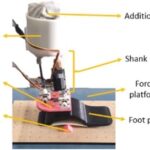 Test Protocol to Assess the Adaptability of a Prosthetic Foot on Irregular Surfaces
Foot prostheses face significant adaptability challenges on irregular surfaces, since many conventional designs lack structures that enhance this capability. Evaluating their performance under these conditions typically requires specialized equipment, user...
Año de publicación: 2025
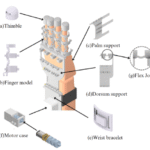 A Modular Soft Hand Exoskeleton with Interactive Interface: Design and Implementation for Spinal Cord Injury Rehabilitation
This paper presents a modular soft hand exoskeleton with an interactive interface designed to assist in rehabilitating individuals with spinal cord injuries experiencing hand spasticity. Following a Human-Centered Design (HCD)...
Año de publicación: 2025
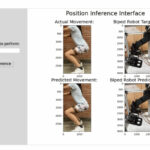 Real-Time EMG Classification for Bipedal Robot Control: A Hands-On Educational Platform
A hands-on educational platform is presented for teaching biosignal processing, machine learning, and robotics through real-time control of a bipedal robot using electromyo-graphic (EMG) signals. Lower-limb EMG signals are captured...
Año de publicación: 2025
Assessing Performance and Mechanics of the PUCP IArm Upper Limb Prosthesis
Access to upper limb prostheses in developing countries, including Peru, is constrained. Models with features like increased individual finger strength and greater degrees of freedom tend to be costly, compelling...
Año de publicación: 2025
Access to upper limb prostheses in developing countries, including Peru, is constrained. Models with features like increased individual finger strength and greater degrees of freedom tend to be costly, compelling...
Año de publicación: 2025
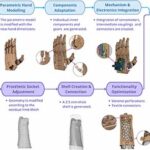 An Affordable AI-Driven and 3D-Printed Personalized Myoelectric Prosthesis: Design, Development, and Assessment
Upper-limb amputations significantly affect independence and quality of life, particularly in low-income regions where advanced prosthetic technology is costly and lacks adequate personalization. Conventional myoelectric prostheses, while offering functional restoration,...
Año de publicación: 2025