
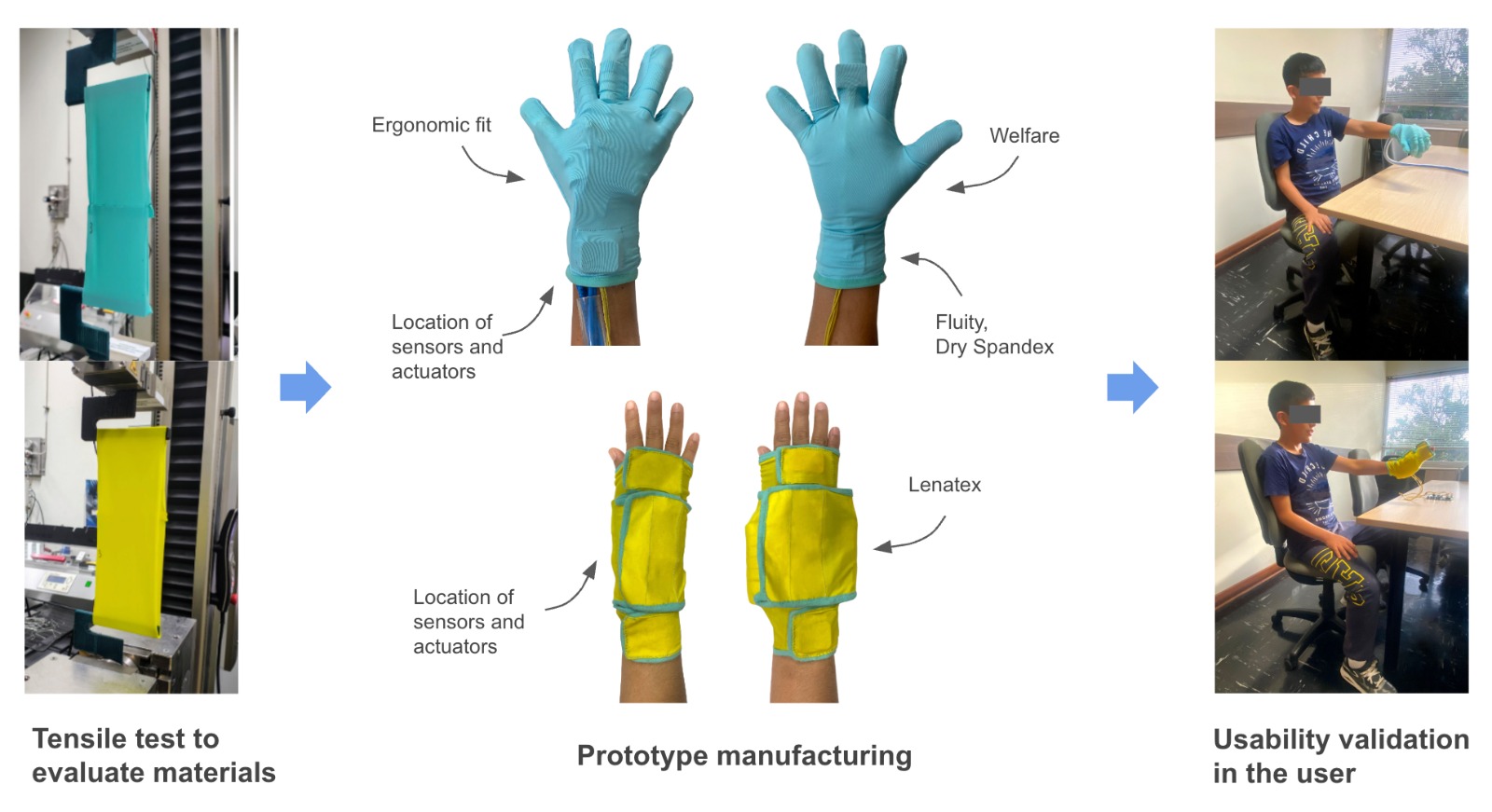
Cerebral palsy, a neurological condition affecting upper-limb mobility and coordination, poses challenges for designing rehabilitation devices that are functional, comfortable, and emotionally acceptable—key factors for therapeutic adherence in children. This study presents the development and optimization of a soft robotic glove for pediatric cerebral palsy rehabilitation, integrating ergonomics, functionality, and aesthetics.
The multilayer design prioritizes ergonomics through three spandex materials—Dry Spandex, Fluity, and Lenatex—chosen for their flexibility and anatomical fit. Mechanical tests following ASTM 4964-96 evaluated their behavior after three usage cycles. Dry Spandex, used in the inner layer, showed only 4% average tension decay, reflecting high elasticity and uniform behavior at low elongations. Fluity, in the outer layer, exhibited higher decay (up to 7.7%) but balanced comfort with adequate support for electronic and pneumatic components. Lenatex, the most rigid material with the lowest variance (0.8), was used in the wristband for predictable mechanical response.
A usability survey with children also revealed positive perceptions of the glove’s aesthetics and overall experience, pointing to areas for future improvement.
Autor(es):Cano, Consuelo
Abarca, Victoria A.
Calderón, Gerard S.
Elias, Dante A.
Año: 2025
Título de la revista: International Journal of Technology (IJTech)
Ciudad: Lima, Perú
Volumen: 16
Número: 5
Página inicial - Página final: 1834 - 1853
Url: https://doi.org/10.14716/ijtech.v16i5.7686