
Background: Loss of hand and wrist function significantly limits daily activities, reducing independence and quality of life. Neurological disorders such as cerebral palsy are among the leading causes, often impairing muscle strength, coordination, and motor control. Since traditional rehabilitation methods like physiotherapy frequently suffer from poor adherence in children, engaging alternatives—such as music- and game-based therapies—show strong potential for improving both adherence and effectiveness.
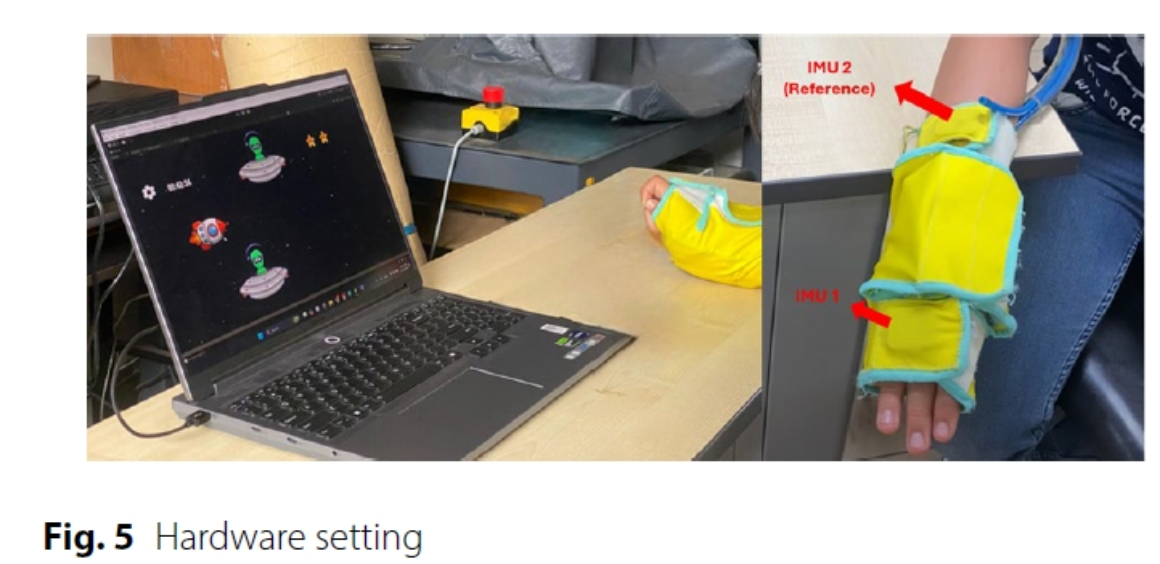
Methods: This study integrates a wearable data glove with a music-based serious game to promote hand and wrist function. Using two inertial measurement units, the glove captures movement as game input, while metronome-based rhythms and volume feedback reinforce motivation and neuroplasticity. Three games target wrist flexion/extension, ulnar/radial deviation, and gross motor grip.
Results: Ten healthy pediatric participants completed sessions with and without music. Statistically significant, though modest, differences emerged across all games, suggesting music subtly modulates motor performance—improving control, smoothness, and consistency depending on the task. Usability results showed high satisfaction, particularly regarding relaxation and engagement.
Conclusions: These exploratory findings support the feasibility of music-driven rehabilitation tools, encouraging future work with clinical populations and long-term outcomes.
Autor(es):Urbina-Alarcón, Javier
Angulo, Ana
Abarca, Victoria E.
Elias, Dante A.
Año: 2025
Título de la revista: Journal of NeuroEngineering and Rehabilitation
Ciudad: Lima, Perú
Volumen: 22
Url: https://doi.org/10.1186/s12984-025-01742-5