
Inicio: 17/08/2026
Fin: 21/08/2026
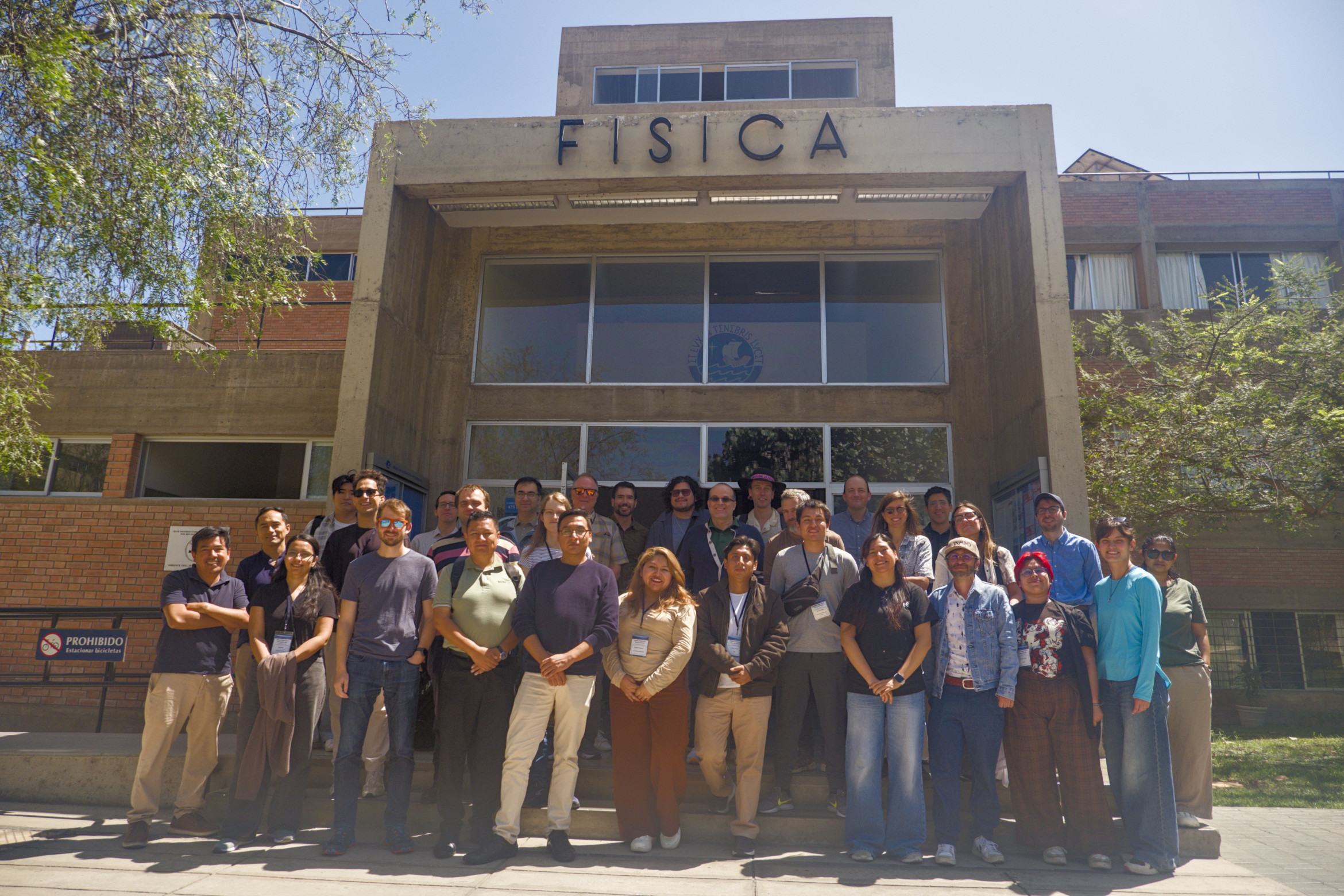
The first in-person TAMBO Collaboration Meeting (https://tambo.fas.harvard.edu/indico/event/1/overview) was hosted by the HEP-PUCP Group from August 17 to 19, 2026, at the Pontificia Universidad Católica del Perú (PUCP) Campus, in the Science and Engineering Auditorium.
The meeting brought together more than 30 members of the collaboration from leading international and Peruvian institutions, including Harvard University, the University of Nevada, University of Wisconsin, University of Hawaiʻi, University of Michigan, Swarthmore College, Queen’s University, University of Cambridge, University of Bern, the Niels Bohr Institute, Université Catholique de Louvain, Sofia University, and, from Peru, Universidad Continental, Universidad del Pacífico, UTEC, Universidad Católica San Pablo and CONIDA.
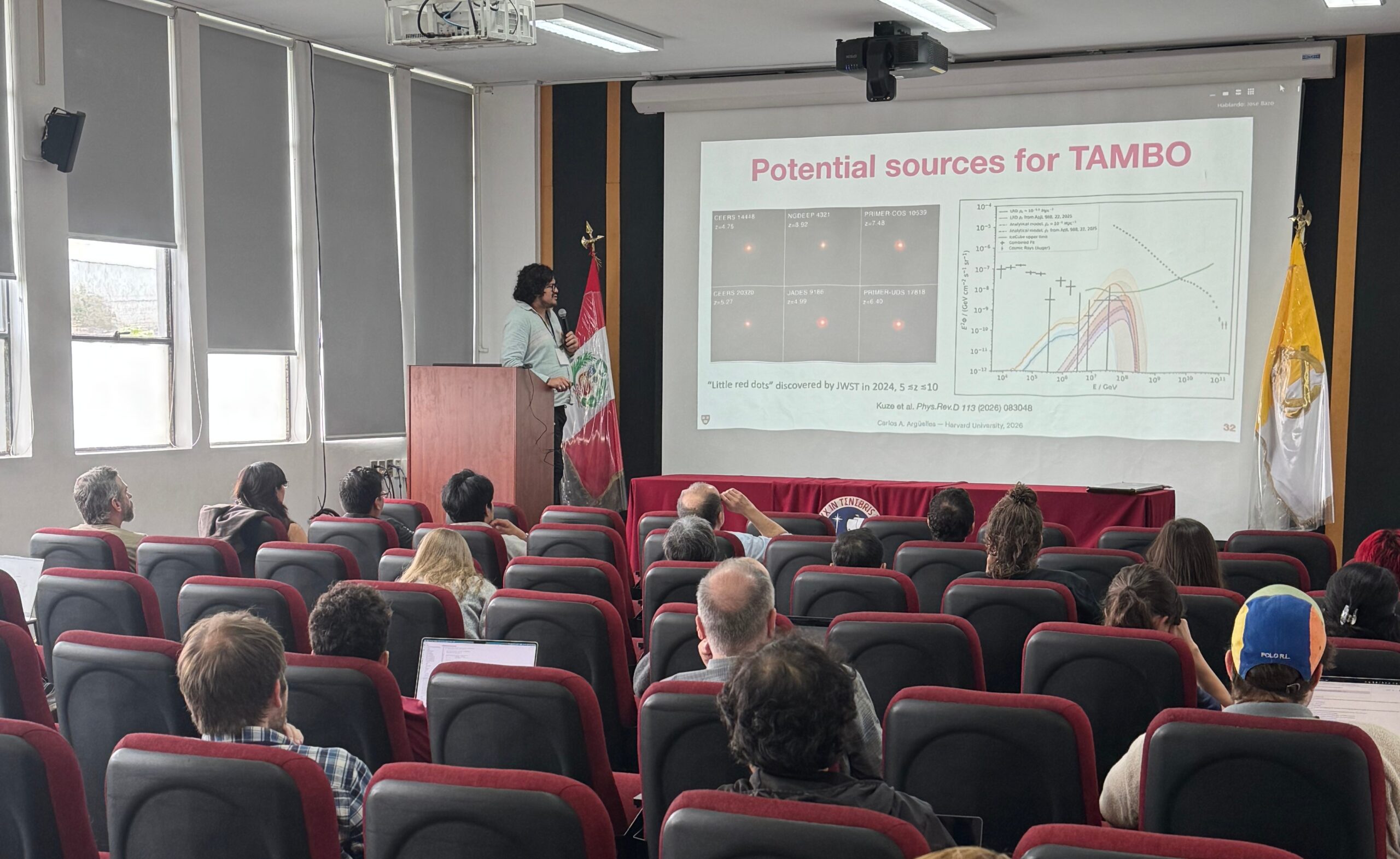
The scientific program covered the main aspects of the TAMBO project, from its overall scientific goals to the development of the TAMBO-4 and TAMBITO detector technologies. Key topics included scintillator detectors, data acquisition systems, timing synchronization, communication and low-power solutions, and water-tank R&D. The physics program addressed neutrino and cosmic-ray science, including background characterization, neutrino flavor sensitivity, diffuse fluxes, Beyond Standard Model physics, and the complementarity between TAMBO and radio-based observatories. Significant progress was also presented in simulation and optimization, including the development of TAMBOSim, machine-learning approaches to accelerate air-shower simulations, and differentiable methods for optimizing the observatory design. The meeting also addressed responsible site selection, incorporating geographical, anthropological, sociological, and socioeconomic considerations, together with preliminary field measurements.
The following two days, August 20 and 21, were dedicated to co-working activities in the HEP Laboratory and Control Room. This time provided collaboration members with an opportunity to work together on ongoing projects and strengthen interactions among the different groups. A public lecture was also given by Prof. Argüelles on “Neutrinos: A Window to the Invisible Universe.